

0



I am ready for a long road flight for work with a week- or months-long projects.
Tan Through Swimwear vs Regular Swimwear:
No Tan Lines Explaine
- What Is Regular Swimwear?
- What Is Tan Through Swimwear?
- Tan Through Swimwear vs Regular Swimwear
- Why Does Regular Swimwear Leave Tan Lines?
- How Does Tan Through Fabric Reduce Tan Lines?
- Does Tan Through Swimwear Really Work?
- Is Tan Through Swimwear Safe?
- Pros and Cons of Tan Through Swimwear
- Who Should Choose Tan Through Swimwear?
- Who Should Stick to Regular Swimwear?
- Frequently Asked Questions
- Final Verdict
Fortunately, swimwear technology has evolved. Tan through swimwear, sometimes called no tan line swimwear, is designed to allow more sunlight to reach your skin while still providing the coverage and comfort of a regular swimsuit. The result is a smoother, more natural-looking tan with significantly reduced tan lines.
But how does it compare with conventional swimwear? Does it actually work? And is it the right choice for you?
In this guide, we'll compare tan through swimwear vs regular swimwear, explain how the technology works, and help you decide which option best suits your lifestyle.
What Is Regular Swimwear?
Traditional swimwear has remained largely unchanged for decades. Most swimsuits are made from blends of:
However, they're also woven tightly enough to block most ultraviolet (UV) rays from reaching your skin.
This is exactly why tan lines appear.
Whenever part of your body is covered by a standard swimsuit, your skin receives significantly less UV exposure than uncovered areas. After several hours in the sun, the difference becomes obvious, creating sharp bikini or swimsuit lines.
For many people, this isn't a problem. Traditional swimwear remains the best option for:
- Nylon
- Polyester
- Polyamide
- Elastane (Spandex/Lycra)
However, they're also woven tightly enough to block most ultraviolet (UV) rays from reaching your skin.
This is exactly why tan lines appear.
Whenever part of your body is covered by a standard swimsuit, your skin receives significantly less UV exposure than uncovered areas. After several hours in the sun, the difference becomes obvious, creating sharp bikini or swimsuit lines.
For many people, this isn't a problem. Traditional swimwear remains the best option for:
- Competitive swimming
- Water sports
- Surfing
- Frequent pool use
- People seeking greater UV protection
What Is Tan Through Swimwear?

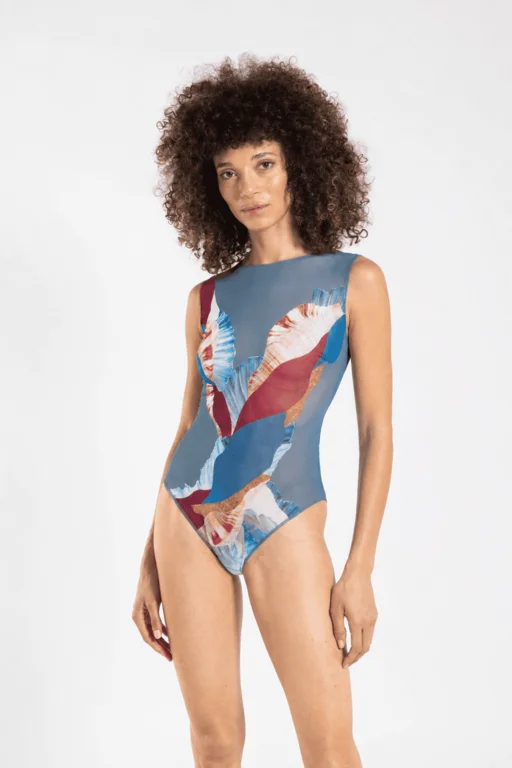
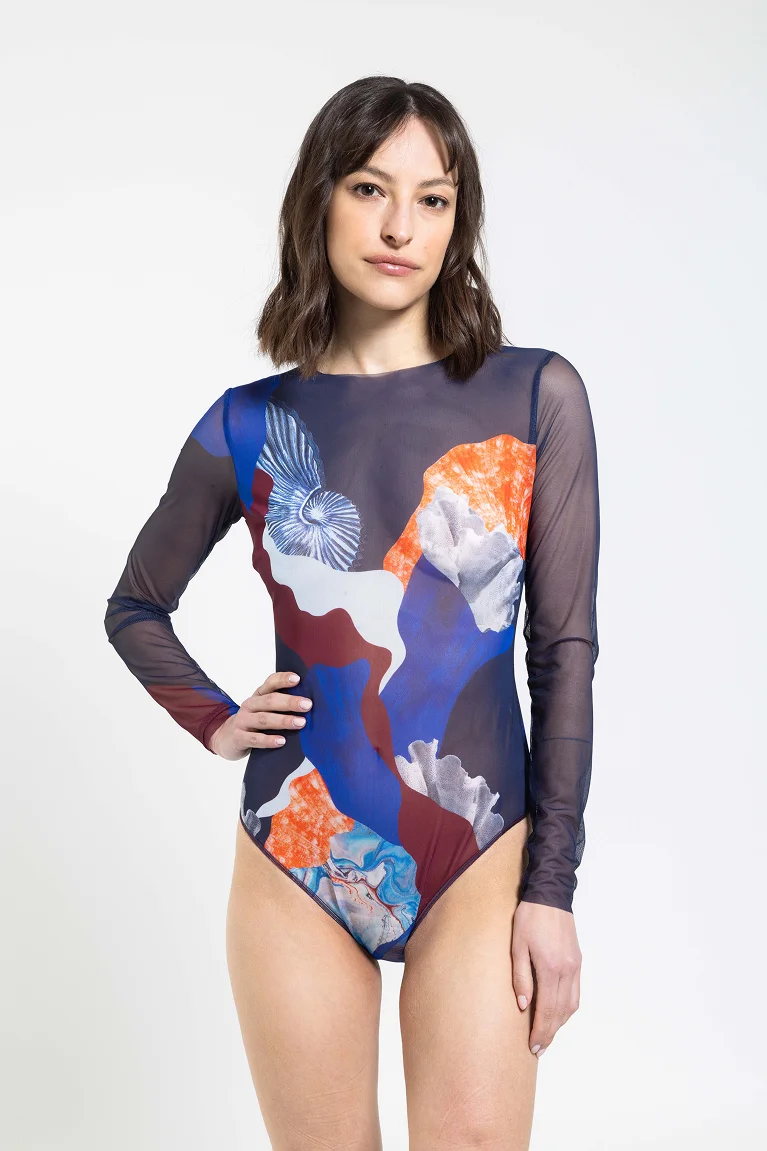
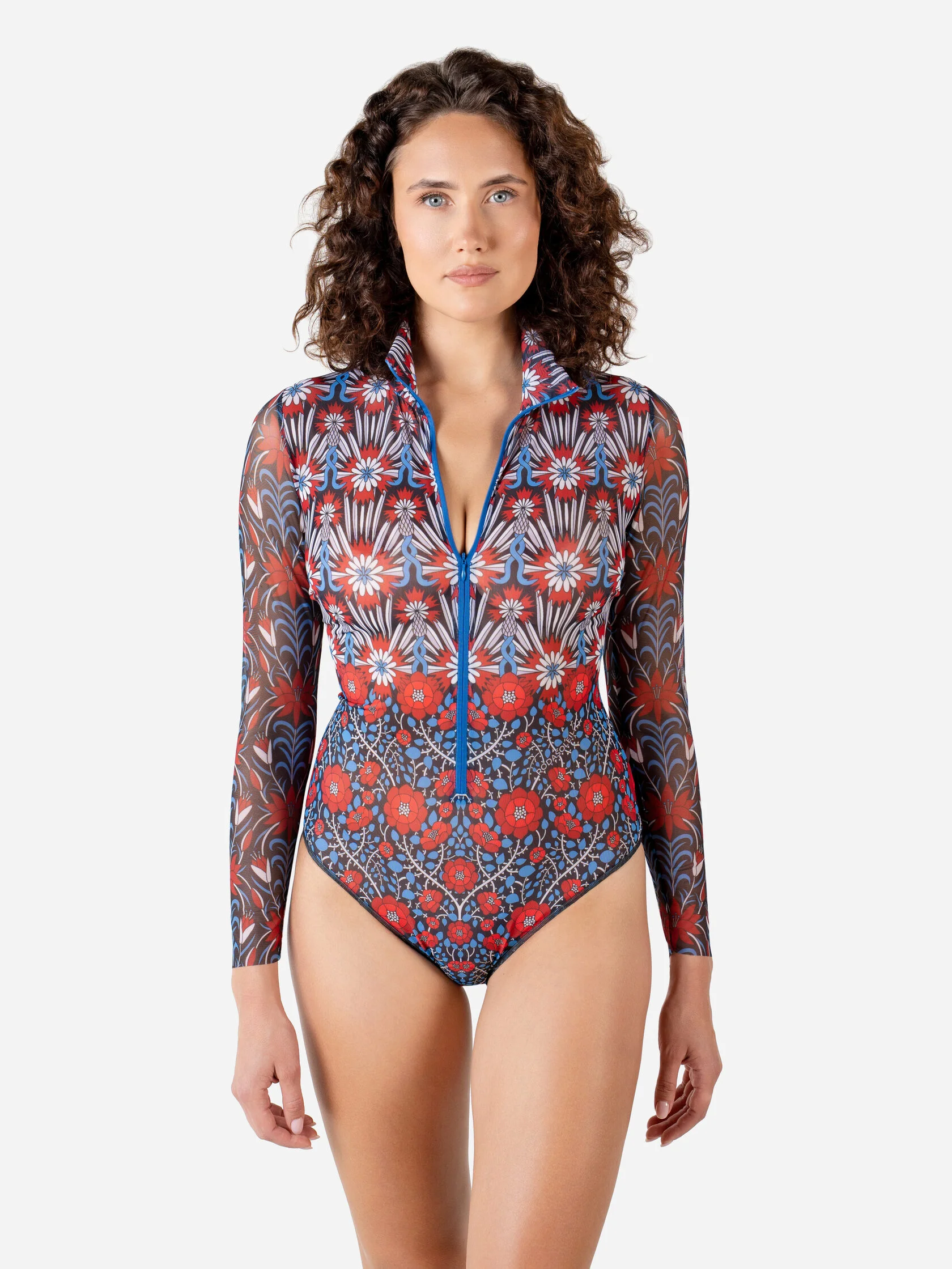
Tan through swimwear is made using specially engineered fabrics that allow a greater percentage of sunlight to pass through the material.
Unlike traditional swimwear, these fabrics contain microscopic spaces within their weave that increase UV transmission while remaining opaque enough for comfortable everyday wear.
To the eye, a tan through swimsuit looks much like any other stylish bikini or one-piece. Yet the fabric behaves differently under sunlight.
Its design offers several advantages:
Unlike traditional swimwear, these fabrics contain microscopic spaces within their weave that increase UV transmission while remaining opaque enough for comfortable everyday wear.
To the eye, a tan through swimsuit looks much like any other stylish bikini or one-piece. Yet the fabric behaves differently under sunlight.
Its design offers several advantages:
- Reduced tan lines
- Better airflow
- Lightweight comfort
- Faster drying
- Improved breathability
Tan Through Swimwear vs Regular Swimwear
Feature | Regular Swimwear | Tan Through Swimwear |
UV transmission | Blocks most sunlight | Allows partial UV transmission |
Tan lines | Clearly visible | Significantly reduced |
Fabric weight | Medium | Lightweight |
Breathability | Moderate | Excellent |
Drying speed | Standard | Faster |
Comfort in hot weather | Good | Excellent |
Best for | Sports & swimming | Sunbathing & swimming |
Both options have their strengths. The right choice depends on how you plan to use your swimwear.
Why Does Regular Swimwear Leave Tan Lines?
The explanation is surprisingly simple.
Sunlight contains ultraviolet rays that stimulate melanin production in the skin. Melanin is the pigment responsible for tanning.
When skin is exposed to UV rays:
Meanwhile, exposed areas continue tanning throughout the day.
The greater the difference in exposure, the more noticeable the tan lines become.
Even premium luxury swimwear behaves the same way because the fabric itself blocks sunlight.
Sunlight contains ultraviolet rays that stimulate melanin production in the skin. Melanin is the pigment responsible for tanning.
When skin is exposed to UV rays:
- Melanin production increases.
- Skin gradually darkens.
- A tan develops.
Meanwhile, exposed areas continue tanning throughout the day.
The greater the difference in exposure, the more noticeable the tan lines become.
Even premium luxury swimwear behaves the same way because the fabric itself blocks sunlight.



How Does Tan Through Fabric Reduce Tan Lines?
The secret lies in fabric engineering rather than tanning chemicals or coatings.
Micro-engineered fabric
Instead of using a dense weave, tan through fabrics are produced with microscopic openings that increase light transmission while maintaining coverage.
The result is a fabric that feels lighter and allows more airflow.
Partial UV transmission
It's important to understand that tan through swimwear does not make your skin receive exactly the same amount of sunlight as uncovered skin.
Instead, it allows enough UV light through the fabric to reduce the contrast between covered and uncovered areas over time.
This creates a much smoother overall tan.
Breathability
The open fabric structure also improves ventilation.
Many users notice that tan through swimwear feels cooler during hot summer days because heat escapes more easily.
Faster drying
Because less water is trapped inside the fabric, these swimsuits often dry more quickly after swimming.
This makes them especially comfortable during beach vacations where you frequently move between the water and the sun.
Micro-engineered fabric
Instead of using a dense weave, tan through fabrics are produced with microscopic openings that increase light transmission while maintaining coverage.
The result is a fabric that feels lighter and allows more airflow.
Partial UV transmission
It's important to understand that tan through swimwear does not make your skin receive exactly the same amount of sunlight as uncovered skin.
Instead, it allows enough UV light through the fabric to reduce the contrast between covered and uncovered areas over time.
This creates a much smoother overall tan.
Breathability
The open fabric structure also improves ventilation.
Many users notice that tan through swimwear feels cooler during hot summer days because heat escapes more easily.
Faster drying
Because less water is trapped inside the fabric, these swimsuits often dry more quickly after swimming.
This makes them especially comfortable during beach vacations where you frequently move between the water and the sun.
Does Tan Through Swimwear Really Work?
One of the most common questions people ask is: Does tan through swimwear actually work?
For most users, the answer is yes—but with realistic expectations.
Tan through swimwear can significantly reduce the appearance of tan lines, but several factors influence the final result:
Because of this, completely invisible tan lines are unlikely.
Instead, most users notice softer transitions and a much more even overall tan.
For most users, the answer is yes—but with realistic expectations.
Tan through swimwear can significantly reduce the appearance of tan lines, but several factors influence the final result:
- Your skin type
- UV intensity
- Length of sun exposure
- Time of day
- Sunscreen use
- Frequency of tanning sessions
Because of this, completely invisible tan lines are unlikely.
Instead, most users notice softer transitions and a much more even overall tan.
Is Tan Through Swimwear Safe?
Reducing tan lines should never come at the expense of skin health. Although tan through fabrics allow more UV rays to reach your skin than traditional swimwear, they do not eliminate the need for sun protection.
For healthy tanning habits:
- Apply broad-spectrum SPF to all exposed skin.
- Don't skip sunscreen beneath tan through swimwear if you'll be in the sun for extended periods.
- Reapply sunscreen after swimming.
- Avoid prolonged sun exposure during peak UV hours.
- Stay hydrated.
A gradual tan is always safer than trying to tan quickly.

Pros and Cons of Tan Through Swimwear
Advantages
- Significantly fewer tan lines
- More even-looking tan
- Lightweight feel
- Excellent breathability
- Faster drying
- Comfortable in warm climates
- Stylish modern designs
- Lower UV blocking than traditional swimwear
- Sunscreen remains essential
- Straps and seams can still leave faint tan lines
- Best results require multiple tanning sessions
Who Should Choose Tan Through Swimwear?
Tan through swimwear is ideal for people who:
- Love sunbathing
- Travel to tropical destinations
- Spend long days at the beach
- Prefer minimal tan lines
- Enjoy lightweight summer clothing
- Want a smoother, more even tan
Who Should Stick to Regular Swimwear?

Traditional swimwear may still be the better option if you:
- Swim competitively
- Surf or paddleboard regularly
- Spend extended hours in direct sunlight without tanning
- Prioritize maximum UV protection
- Need extra fabric durability for athletic activities
Performance-focused swimmers generally benefit more from conventional swimwear.
Frequently Asked Questions
Does tan through swimwear really work?
Yes. Most users experience noticeably softer tan lines and a more even tan after repeated sun exposure.
Can I swim in tan through swimwear?
Absolutely. Tan through swimwear is designed for both swimming and sunbathing.
Will I get a perfectly even tan?
Not completely. Straps, seams, and elastic bands may still create slight differences in tanning.
Should I wear sunscreen?
Yes. Sunscreen is still recommended, even underneath tan through swimwear during extended exposure.
Is tan through swimwear see-through?
No. High-quality tan through fabrics are engineered to provide normal coverage while allowing more sunlight to pass through.
Does it dry faster?
In many cases, yes. Lightweight construction typically allows water to evaporate more quickly than traditional swimwear.
Yes. Most users experience noticeably softer tan lines and a more even tan after repeated sun exposure.
Can I swim in tan through swimwear?
Absolutely. Tan through swimwear is designed for both swimming and sunbathing.
Will I get a perfectly even tan?
Not completely. Straps, seams, and elastic bands may still create slight differences in tanning.
Should I wear sunscreen?
Yes. Sunscreen is still recommended, even underneath tan through swimwear during extended exposure.
Is tan through swimwear see-through?
No. High-quality tan through fabrics are engineered to provide normal coverage while allowing more sunlight to pass through.
Does it dry faster?
In many cases, yes. Lightweight construction typically allows water to evaporate more quickly than traditional swimwear.
Final Verdict
Both traditional and tan through swimwear have their place.
If your priority is athletic performance, durability, and greater UV protection, conventional swimwear remains an excellent option.
However, if you're looking for a smoother, more even tan with fewer visible tan lines, tan through swimwear offers an innovative solution that combines smart fabric technology, comfort, breathability, and modern style.
For beach lovers, frequent travelers, and anyone who enjoys spending sunny days by the water, it provides a practical way to enjoy the sun while reducing one of the most common frustrations of traditional swimwear—the unmistakable tan line.
If your priority is athletic performance, durability, and greater UV protection, conventional swimwear remains an excellent option.
However, if you're looking for a smoother, more even tan with fewer visible tan lines, tan through swimwear offers an innovative solution that combines smart fabric technology, comfort, breathability, and modern style.
For beach lovers, frequent travelers, and anyone who enjoys spending sunny days by the water, it provides a practical way to enjoy the sun while reducing one of the most common frustrations of traditional swimwear—the unmistakable tan line.
Special offer
Ready for the perfect tan? Choose the smart RoDaSoleil swimsuit.
Get a more even tan without white marks from your swimsuit and enjoy comfort on the beach, by the pool, and while relaxing.
— Innovative tanning technology through fabric
— Quick drying after swimming
— Comfortable fit and high-quality materials
— Wide selection of smart swimsuits
— Quick drying after swimming
— Comfortable fit and high-quality materials
— Wide selection of smart swimsuits